
When words feel too big or too scary, children find other ways to tell their story. Child play therapy creates a safe, gentle space where your child can express what’s happening inside, through toys, art, sand, and imagination, with a trained therapist who truly understands.
What is Child Play Therapy?
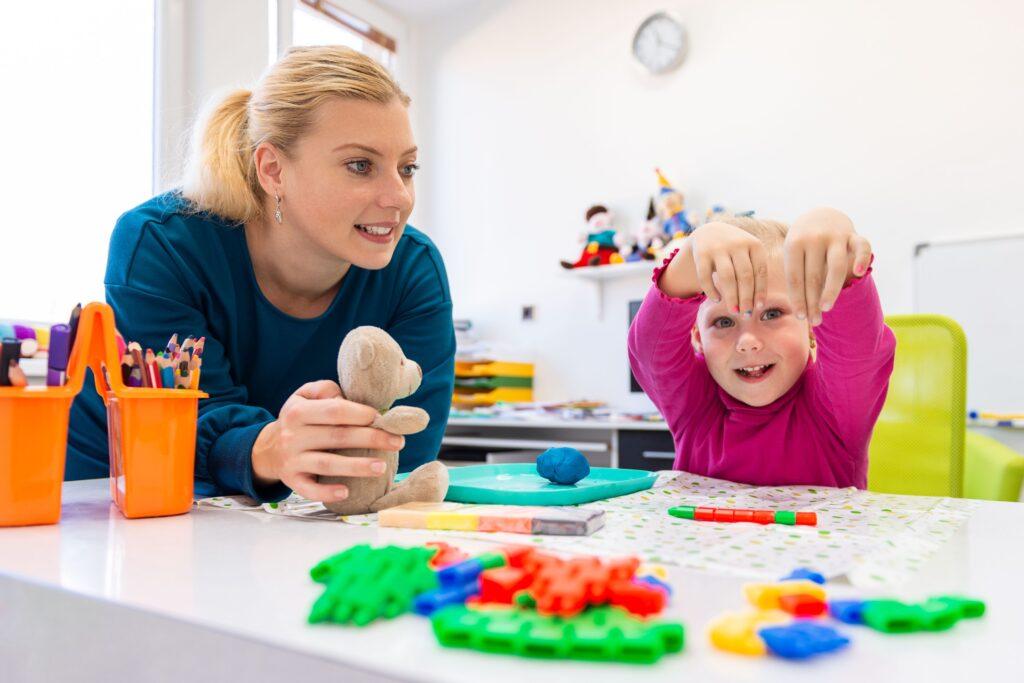
Play is how children make sense of their world. It’s their natural language long before they have the words to explain what they’re feeling or what’s troubling them.
In Ireland, 1 in 5 children experience some form of emotional, social or behavioural difficulty, from anxiety and low mood to struggles after loss or big changes. Child play therapy uses this instinct – this need to play – as a therapeutic tool. Through carefully chosen toys, games, creative materials, and storytelling, a qualified play therapist helps children communicate what’s going on inside.
What it helps with:
- Emotional expression and regulation – learning to identify, understand, and manage big feelings
- Confidence and resilience – building inner strength to cope with life’s challenges
- Better behaviour and relationships – healthier ways of relating to others and themselves
When Play Therapy can Help
You might be wondering if your child needs support. Maybe they’re not quite themselves lately. Perhaps they’ve become more withdrawn, more clingy, or more easily overwhelmed than before.
Play therapy can support children through a wide range of experiences and emotions:
- Anxiety, worries, fears, or panic
- Big emotions like meltdowns, irritability or intense sadness
- Low confidence, withdrawal or not wanting to try new things
- Grief, bereavement or loss of someone important
- Separation, divorce or family transitions
- School refusal, struggles with friendships or social difficulties
- Bullying or feeling excluded
- Trauma or stressful events they’ve witnessed or experienced
- Behaviour changes at home or school that feel out of character
- Support for neurodivergent children navigating a world that doesn’t always understand them
These challenges are more common than you might think. According to government data on youth mental health in Ireland, anxiety and depressive disorders represent almost two-thirds of all mental health conditions among children and young people. Recent Health Research Board figures show that anxiety, eating disorders and stress-related difficulties are the most common reasons children and adolescents need mental health support.
Your child doesn’t need to be in crisis to benefit from play therapy. Sometimes it’s just about having a safe person and a safe place to process what life is throwing at them.
Child Play Therapy in Ireland – Practical Information
Ages we work with: Children from 3 years old , adolescents, and up to late teens..
Where we’re based: Mind and Body Works offers child play therapy in Dublin, and Galway. Online parent sessions can complement in-person play therapy for children or provide accessible support for families outside our clinic locations.
Session length: Typically 45-50 minutes.
How to get started: You don’t need a GP referral. Parents can self-refer by contacting us directly. Schools, GPs, or other professionals can also make referrals with parental consent.
What happens in a session?
Sessions usually run for 45-50 minutes and typically happen weekly, though this can be adjusted based on your child’s needs and what works for your family.
Here’s what you can expect:
- Gentle settling-in and routine – The therapist creates a predictable, safe structure so your child knows what to expect. Trust builds slowly.
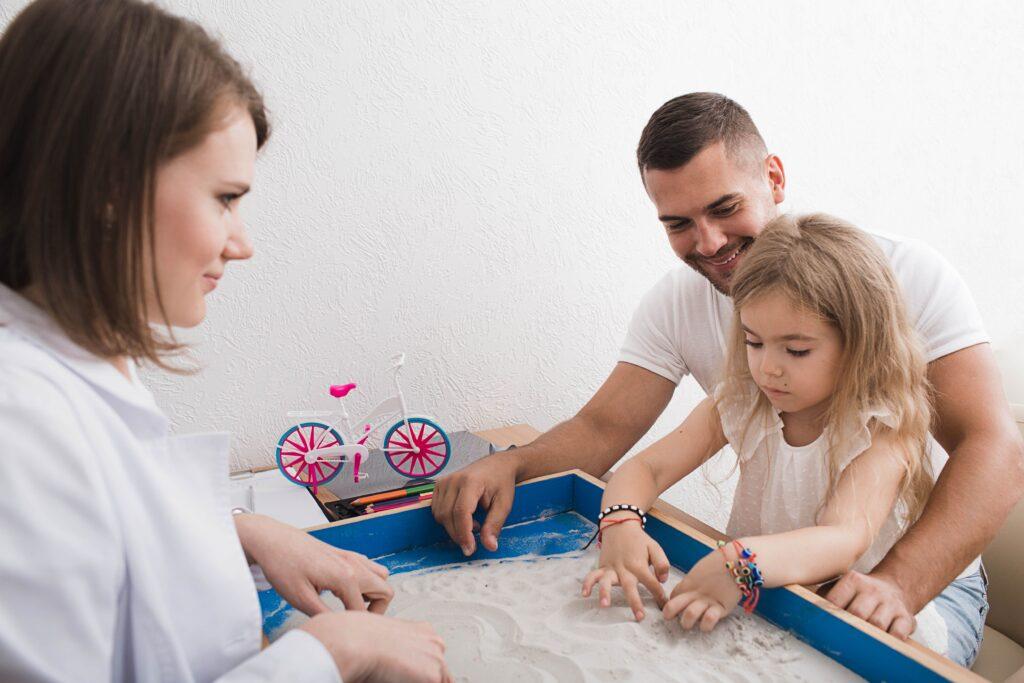
- Play-based expression – Your child leads the way. They might use dolls, puppets or small figures to act out scenarios. They might draw, paint, or work with sand. They might tell stories or create imaginary worlds. The therapist follows their lead, gently guiding when needed.
- Closing and transition – Each session ends with a calm wind-down, helping your child transition back to the rest of their day.
The therapist isn’t just watching your child play. They’re trained to understand the symbolic language of play, to notice patterns, and to help your child process emotions they can’t yet name.
How Parents are Supported
You’re not left in the dark. Play therapy works best when parents and therapists work together.
What this looks like:
- Initial parent consultation – Before your child’s first session, you’ll meet with the therapist to discuss your concerns, your child’s history, and what you hope therapy might help with.
- Regular review sessions – Every few weeks, the therapist will check in with you to discuss progress, answer questions, and offer guidance.
- Practical strategies for home – You’ll receive support and suggestions for how to respond to your child’s needs outside of sessions, helping you feel more confident as a parent.
Your child’s confidentiality is protected. The therapist won’t share details of what happens in the playroom unless there’s a safety concern. But you’ll always be kept informed about broader themes and progress.
What Families Often Notice Over Time
Change doesn’t happen overnight, and every child moves at their own pace. But families often begin to notice shifts:
- Fewer overwhelm moments—your child learns to self-soothe and regulate their emotions more effectively
- Improved communication and confidence—they start to name their feelings or ask for what they need
- Healthier boundaries and relationships—they relate to siblings, friends, or classmates with more patience and empathy
- More ease with transitions and change—moving between activities, handling disappointments, or adapting to new situations feels less fraught
Research shows that play therapy is remarkably effective, with outcomes particularly strong for children who’ve experienced trauma, domestic violence, anxiety and grief. A large-scale meta-analysis of 93 controlled studies found play therapy has significant positive effects across a wide range of difficulties. In Ireland specifically, over 80% of children show positive change from pre-therapy to post-therapy assessments.
Why choose us
Accredited, qualified play therapists: Our therapists are registered with professional bodies including the Irish Association for Play Therapy & Psychotherapy (IAPTP) and Play Therapy Ireland (PTIrl), ensuring high standards of practice and ongoing professional development.
Child-safe, welcoming therapy space: We’ve created playrooms specifically designed to help children feel at ease and able to express themselves freely.
Evidence-informed approach: We draw on research-backed methods including child-centred play therapy, attachment theory, and trauma-informed practice.
Experience with common child and family concerns: From everyday anxieties and friendship troubles to more complex trauma, grief, and family transitions, we understand what children and families face.
Common questions
How do I know if my child needs therapy?
Trust your instincts. If you've noticed changes in your child's behaviour, mood, or wellbeing that worry you, or if they're going through something difficult, it's worth reaching out. A conversation with a play therapist can help you decide together if therapy would be helpful.
How long does play therapy take?
Every child is different. Some families notice progress within 8-12 weeks, while others benefit from longer-term support over several months. Your therapist will review progress regularly with you and adjust the plan as needed.
Will you tell me what my child says in sessions?
The playroom is your child's confidential space. The therapist won't share specific details unless there's a safety concern. However, you'll have regular check-ins to discuss themes, progress and how to support your child at home.
Ready to take the next step?
Reaching out can feel daunting. You might worry you're overreacting, or that your child's struggles aren't "serious enough" for therapy. But if you're concerned, that matters. Your instinct to seek support for your child is a sign of strength, not weakness.