Stillorgan Counselling & Psychological Services
Life has a way of throwing curveballs. Perhaps you have been lying awake at 3am, thoughts spiralling. Or maybe you have noticed yourself withdrawing from the people you care about, unable to explain quite why. These experiences are more common than you might think. A 2022 study published in Epidemiology and Psychiatric Sciences found that 42% of adults in Ireland meet the diagnostic criteria for at least one mental health condition at any given time.
That figure might surprise you. It certainly challenges the notion that struggling with your mental health makes you unusual or broken. Quite the opposite. It makes you human.
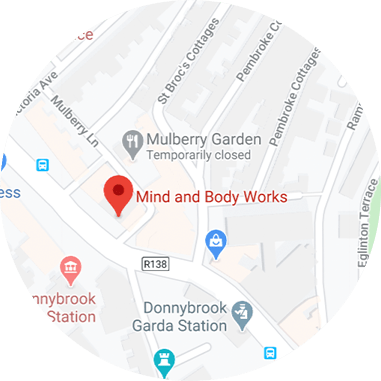
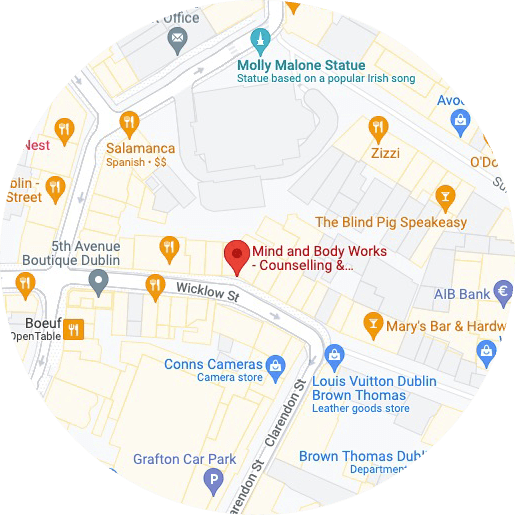
If you live in Stillorgan, Foxrock, Leopardstown, Sandyford, or anywhere in South Dublin, professional therapeutic support is closer than you realise. Mind and Body Works operates centres in Donnybrook (Dublin 4) and Dundrum (Dublin 14), both easily accessible from the Stillorgan area by car, bus, or Luas. We also offer online sessions for those who prefer the flexibility of attending from home. Whether in person or online, our therapy centres in Dublin are here to support you.
Why Consider Counselling or Psychotherapy?
Therapy is not about being fixed because you are not broken. It is about having a dedicated space to understand yourself more fully, to process difficult experiences, and to develop practical skills for managing whatever life throws at you.
According to Aware’s 2024 national survey, 81% of people experiencing depression or anxiety have taken steps to address their mental health, up from 74% in 2023. People are increasingly recognising that reaching out for support is not a weakness. It is a sensible response to genuine difficulty.
Working with a qualified therapist gives you something quite rare: an hour each week that belongs entirely to you. No distractions, no competing priorities, no need to filter what you say to protect anyone else’s feelings. Just space to be honest about what is actually going on.

Is My Counsellor or Psychotherapist Properly Qualified?
Therapy is built on trust. You will share some of your most personal thoughts and feelings with someone else – perhaps for the first time. Due to this fact, you need to be able to trust that your therapist is both knowledgeable of mental health topics, ethically sound, and empathetic.
At Mind and Body Works, we understand this. That is why, when you seek counselling with us, you will be working with the best of counselling in the Stillorgan area. Why can you trust our team of therapists?
Well, all our therapists are highly educated and experienced in their respective fields. Do you want to try cognitive behavioural therapy? Or maybe talk therapy? Regardless of what you need, all of our counsellors and therapists are qualified and recognised by a professional association, such as the Irish Association of Humanistic and Integrative Psychotherapy (IAHIP) and the Irish Association of Counselling and Psychotherapy (IACP), or the Psychological Society of Ireland (PSI).

What Issues Can Therapy Help With?
People seek counselling for all sorts of reasons. Sometimes there is a clear trigger, like a relationship breakdown or bereavement. Other times, there is simply a persistent sense that something is off, even when life looks fine on paper.
Anxiety and Overwhelm
That racing heart when you check your emails. The way your stomach knots before social situations. The exhaustion of constantly anticipating the worst. Anxiety affects three in four adults in Ireland at some point in their lives, according to Aware’s research. Therapy can help you understand what drives your anxiety and develop concrete strategies for managing it.
Low Mood and Depression
Research from Maynooth University and Trinity College Dublin found that major depressive disorder affects approximately 12% of Irish adults. If getting out of bed feels like wading through treacle, if activities you once enjoyed now feel pointless, if you are going through the motions without really being present, therapy can offer a pathway back to yourself.
Work Stress and Burnout
A 2023 survey by Robert Walters found that 60% of Irish professionals reported experiencing workplace stress, with one in three experiencing it very often. The boundaries between work and home have become increasingly blurred, and many people are running on empty without quite realising it. Therapy can help you to recognise the early warning signs of burnout and establish healthier patterns.
Relationship Difficulties
Whether you are navigating conflict with a partner, struggling with family dynamics, or finding it hard to form close connections, relationship patterns often have deeper roots than we realise. Individual therapy can help you understand your own part in relationship difficulties, while couples counselling provides a structured space for both partners to be heard.
Life Transitions and Loss
Grief does not follow a neat timeline. Neither does adjusting to major life changes like becoming a parent, ending a relationship, or facing a health diagnosis. These transitions often involve mourning the life you expected while simultaneously adapting to a new reality. Therapy can provide a space to process these complex, layered emotions.

Therapeutic Approaches Available
There is no single correct way to do therapy. Different approaches suit different people and different difficulties. Our team includes therapists trained in various evidence-based modalities.
Cognitive Behavioural Therapy (CBT) focuses on the connection between thoughts, feelings and behaviours. It is particularly effective for anxiety and depression, helping you identify unhelpful thinking patterns and develop more balanced perspectives. CBT tends to be structured and goal-oriented, often showing results within 8 to 20 sessions.
Psychodynamic and Psychoanalytic Therapy explores how past experiences, including early relationships and unconscious patterns, shape your present difficulties. This approach suits people interested in deeper self-understanding.
Integrative and Humanistic Approaches draw on multiple theoretical frameworks, tailoring the work to your specific needs. These approaches emphasise the therapeutic relationship itself as a vehicle for change and personal growth.
EMDR (Eye Movement Desensitisation and Reprocessing) is a specialist approach for processing traumatic memories. It can help reduce the intensity of distressing memories and is particularly useful for PTSD and trauma-related difficulties.
How Do I Know My Therapist Is Properly Qualified?
Every therapist working with Mind and Body Works holds recognised professional qualifications and is registered with an appropriate accrediting body. This includes organisations such as the Irish Association for Counselling and Psychotherapy (IACP), the Irish Association of Humanistic and Integrative Psychotherapy (IAHIP), and the Psychological Society of Ireland (PSI).
These bodies require their members to meet educational standards, engage in ongoing professional development, adhere to ethical codes of practice, and maintain clinical supervision.
What Happens in a First Therapy Session?
The first session is really about getting the lay of the land. Your therapist will want to understand what has brought you to therapy now, what you hope to get from it, and a bit about your background and current circumstances.
You do not need to have your thoughts perfectly organised before you arrive. You do not need to share everything at once. A good therapist will pace the conversation and help you feel at ease. They will cover practical matters like scheduling and payment, and there will be time for any questions you want to ask.
First sessions are also about fit. You are not committing to anything by attending. If after your first sessions you do not feel your therapist is a good fit, we are here to support you in identifying an alternative therapist who you feel more aligned to.
The relationship between therapist and client is one of the strongest predictors of successful outcomes, so finding someone you feel comfortable with genuinely matters.
Is Online Therapy as Effective as In-Person Sessions?
Research consistently shows that online therapy can be just as effective as face-to-face sessions for many conditions, including anxiety and depression. The HSE has integrated digital CBT services into its primary care offerings, reflecting growing confidence in remote delivery of mental health support.
For many people, online therapy is preferable. There is no commute, no waiting room, and no chance of bumping into someone you know. You can attend from wherever you feel most comfortable, whether that is your home office, your parked car, or anywhere with a stable internet connection and privacy.
Mind and Body Works offers online sessions with therapists throughout Ireland. If you live in Stillorgan but cannot easily get to our Donnybrook or Dundrum centres, or if you simply prefer the convenience of remote sessions, this option is available.
Overcoming Common Barriers to Seeking Help
“My problems are not serious enough.” There is no threshold of suffering that you need to cross before you deserve support. People come to therapy for all sorts of reasons, from clinical depression to simply feeling stuck. If something is bothering you enough that you are considering therapy, that is reason enough.
“I should be able to handle this myself.” But why should you? We do not expect people to extract their own teeth or rewire their own houses. Seeking specialist help when you need it is practical, not weak.
“I cannot afford therapy.” Cost is a genuine concern. Private therapy is an investment, and it is not accessible to everyone. Mind and Body Works offers a range of fee levels depending on the therapist. Some health insurance plans provide partial coverage for psychotherapy, and you may be entitled to claim tax relief on therapy expenses. It is worth checking your options.
“I do not know where to start.” That uncertainty is completely normal. You can get in touch with our team directly, and we will help you identify which type of therapy and which therapist might suit your needs. You do not need to have it all figured out before you make contact.
How to Book a Session
Getting started is straightforward. You can contact our team by phone on 01 677 1021 or email appointments@mindandbodyworks.com. We will discuss your situation briefly and help match you with an appropriate therapist based on your needs, location preferences, and availability.
Alternatively, you can browse our therapist profiles on the Mind and Body Works website and book with a therapist directly. Each profile includes information about the therapist’s background, approach, and areas of expertise. Book your appointment now.
Choose Preferred Location Near Stillorgan Below

Online Therapy FAQs
Most people attend weekly, particularly at the start of therapy. This creates enough continuity to build momentum while giving you time between sessions to reflect and integrate what you have discussed. As therapy progresses, some people move to fortnightly sessions. Your therapist will discuss what makes sense for your situation.
This varies enormously. Some people find that 6 to 12 sessions are enough to address a specific issue or get through a difficult period. Others benefit from longer-term work spanning months or years, particularly if they are addressing deep-rooted patterns or complex trauma. There is no right answer; it depends on your goals and what emerges in the work.
Standard sessions are 50 to 60 minutes.
Fees vary depending on the individual therapist. Contact us for current pricing information. Some therapists offer reduced rates in specific circumstances, and it is always worth asking. Remember that you may be able to claim tax relief on psychotherapy expenses through Revenue.
Yes. Therapists are bound by strict professional codes that protect your privacy. The only circumstances where this might not apply involve safeguarding concerns or legal obligations, which are rare. Your therapist will outline these boundaries in your first session so you know exactly where you stand.
Most therapists ask for 24 to 48 hours notice if you need to cancel or reschedule. Sessions cancelled without adequate notice may still be charged. Check the specific policy with your therapist.
The terms are often used interchangeably in Ireland. Broadly speaking, counselling tends to focus on specific issues and shorter-term work, while psychotherapy may involve deeper exploration of underlying patterns over a longer period. In practice, the distinction is less important than finding a therapist whose approach suits you.
Yes. Mind and Body Works has therapists who specialise in working with couples navigating relationship difficulties, communication breakdowns, or major life transitions. Family therapy is also available for situations where the whole family system needs support.